Each crystal or gemstone can be found in many different shapes, but actually each one has specific properties. Here are some of them:
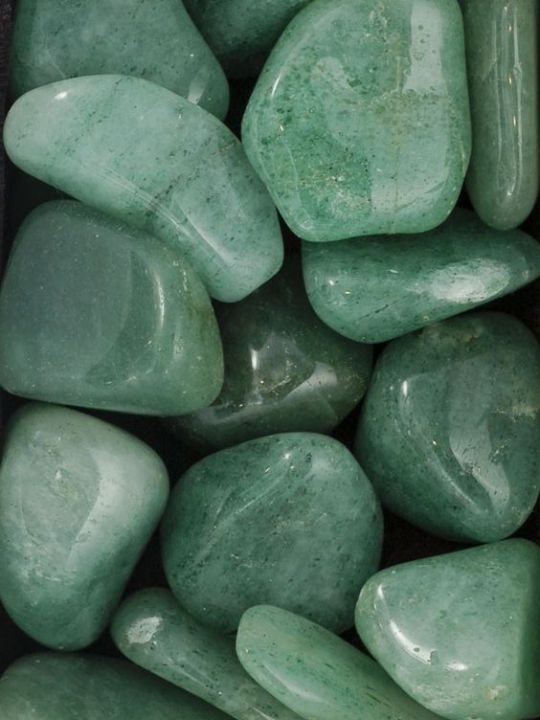
Tumbled Stones
This stones are the ones whose shape has been smoothed or polished from their raw form. Ideal for meditation, affirmations and altar work. This shape evens and gentle energy.
Abundance stones
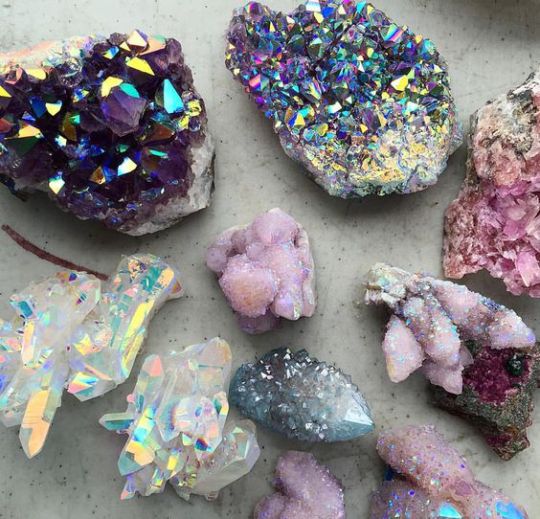
This is basically an elongated crystal with clustered, smaller crystals around it. This is perfect for wealth and abundance, hence it’s name. Useful, for example, to use in business.
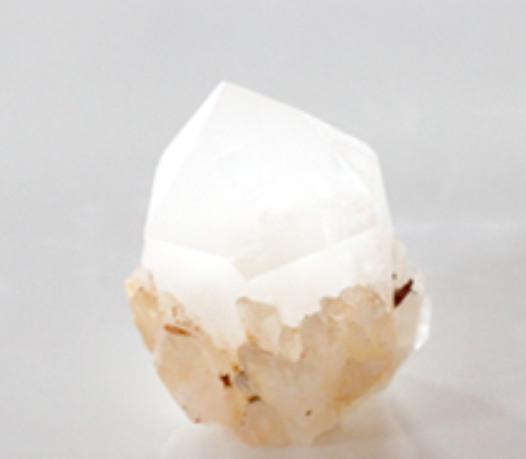
Natural point stones
Not necessary a wand-like crystal, they’re any part of a faceted crystal with a point that has formed naturally and not precisely perfected. This are useful to draw energy from a body or to the body. Perfect for cleansing and healing.
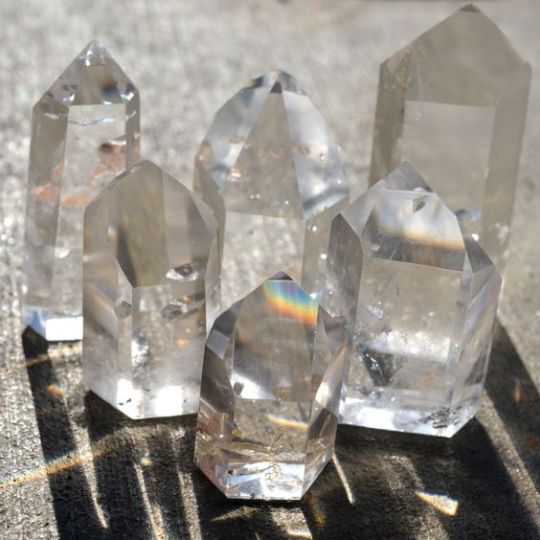
Generator stones
A Generator will have six facets (of equal or unequal proportions) that meet into one point. It gets its name for its ability to generate amplified energy, boosting the power of other stones, or the stone it is made of. This type of formation is also very powerful for charging other stones.
Geode
Geodes have the ability to hold energy within and soften it, allowing it to naturally flow out and disperse evenly. These formations are great for protection or for assisting with healing abusive habits such as alcoholism and abusive internal monologues.
Raw stones
Raw stones are in their natural form and have not been smoothed, polished or altered. Also they’re often considered as more fragile than it’s relatives. They are great for all spiritual work.
Pyramid stones
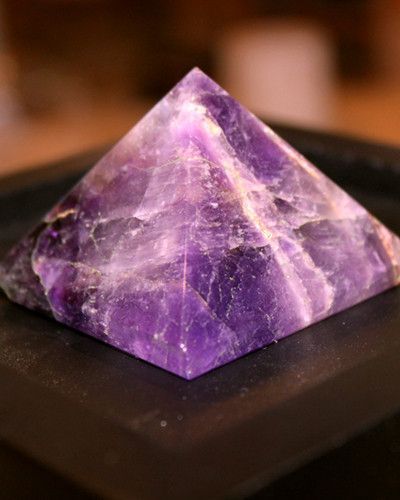
This refers to four equal triangle faces and a square base. This is pretty often used in healing, it’s useful for warding off negative energy and also removing blocks from the chakra system. Also good for affirmations and manifestation work.
Spheres
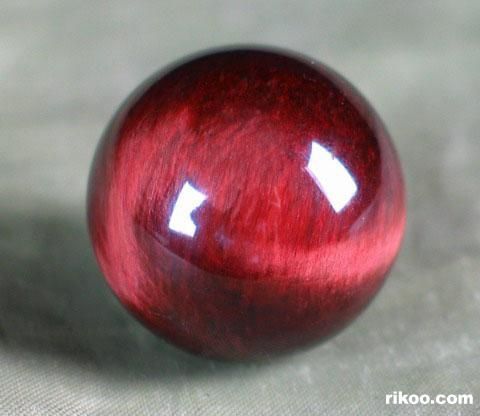
These powerful formations are great for scrying. As it’s form is smooth from every possible angle, is believed that light, energy and time pass through it with no rules or hindrances, hence their scrying abilities.
Cubes
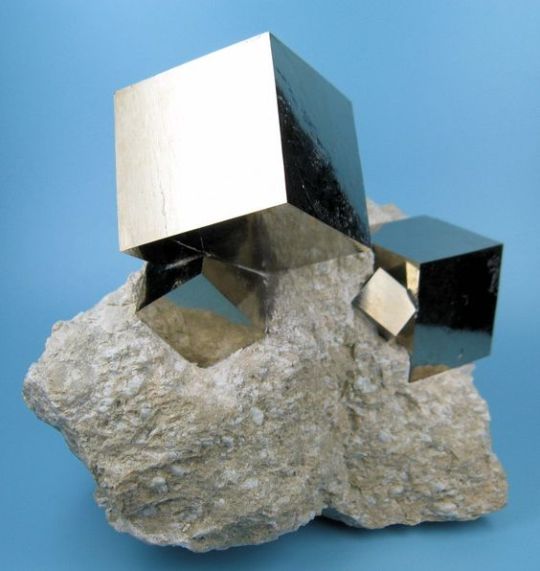
Perfect for grounding energies and intentions, believed that energy is contained and enhanced in this stone shape. Transmutes negative to positive energy, perfect for mindfulness and concentration.
*****I do not own any of this images. All rights to their owners*****
I got it on sale for 25 dollars and it has so much information in it. It has scientific information on the stones, historical, where you can find them and in some cases how they are made, their spiritual qualities as described by 3 different individuals. I think its very informative and is a good way to research stones and crystals you’ve never worked with. It also tells you if a stone is toxic or not which is information I found in the witch community is often ignored or overlooked which is dangerous.
Below is a list of helpful terms to know when working with gems and minerals. It includes terminology on various crystal shapes and forms. Terms specific to mineral shapes have “(form)” next to them for ease of reference.
Abundance (form): An abundance crystal consists of one long quartz crystal with many small crystals clustered around its base. Its function is to attract wealth and abundance.
Adamantine Luster: A particularly brilliant shine as shown by a specimen such as a diamond.
Amorphous (form): Amorphous crystals, such as obsidian, have no particular shape. Energy flows rapidly through and amorphous crystal as it has no rigid internal organization.
Aura: The subtle bio-magnetic sheath that surrounds the physical body, providing a protective zone that extends for about 18 inches to 3 feet from the body and contains information about a person’s physical, mental, emotional, and spiritual state of being.
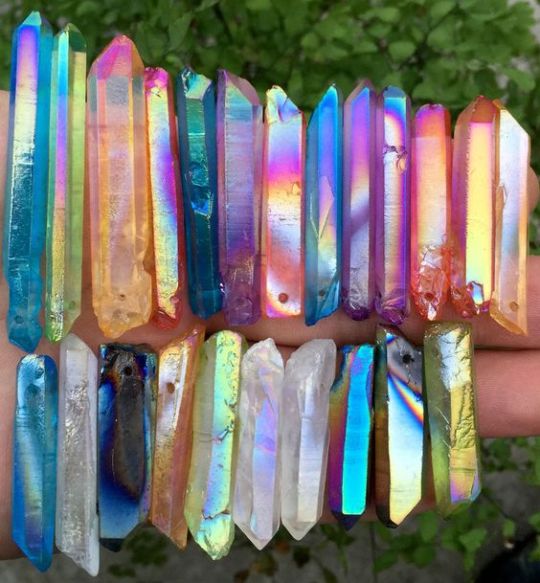
Aura Crystal: A crystal specimen, usually of the quartz variety, that has been coated with metal (i.e. gold, titanium) in a vacuum chamber resulting in an iridescent sheen.
Ball (form): Balls are usually shaped from a larger piece of crystal and may have planes or flaws within them. They emit energy in all directions equally.
Barnacle (form): A barnacle crystal has many small crystals covering a larger crystal.
Bridge (form): A bridge crystal grows out of another larger crystal. It assists in bridging gaps and bringing things together.
Carat: The standard measure of weight for precious stones and metals. A carat is equal to 0.007 oz (0.2g).
Cathedral Quartz (form): Cathedral quartz may appear to be composed of several convoluted pieces, but these are in fact all part of the main crystal which has multiple terminations with at least one point at the apex.
Channeler (form): A channeling crystal has a 7 sided facet at the front of the termination and a triangular face on the opposite side. It channels healing energy or information from higher sources.
Cleavage: The way a mineral or rock breaks along a certain plane, or in a certain direction.
Cluster (form): A cluster has many points bedded, but not necessarily fixed, into a base. The crystals may be small or large.
Companion (form): A companion crystal has two crystals entwined and partly growing in each other, or a small crystal that grows out of the main crystal.
Cross (form): A cross formation has one crystal at right angles to another, usually larger crystal.
Crystal: A naturally occurring substance whose atoms are arranged in a regular manner.
Crystal System: The systems in which crystals are grouped based on their symmetry. There are 6 crystal systems: cubic, monoclinic, triclinic, trigonal/hexagonal, orthorhombic, and tetragonal.
Diamond Window (form): Flat faces at the top of crystals are called windows. A diamond window is large and connected to the apex and the base.
Double Terminated (form): A crystal with two naturally faceted ends.
Dull Luster: A shine that reflects very little.
Earthy Luster: A non-reflective mineral luster.
Egg (form): A crystal cut in the shape of an egg.
Elestial (form): An elestial has many natural terminations and folds over a multilayered crystal.
Etched (form): An etched crystal that looks as though hieroglyphs or cuneiform writing has been inscribed on its faces.
Faces: The External flat surface that make up a crystal’s shape.
Fault Line: An inner flaw or break in a crystal that refracts light and appears to divide the crystal into sections.
Fluorescence: The optical effect whereby a mineral appears a different color in ultraviolet light than in ordinary daylight.
Fracture: The distinctive way a mineral breaks.
Friable: Minerals that easily crumble are referred to as friable.
Gemstone: A mineral, usually crystal-like, which is valued for its color, rarity, and hardness.
Generator (form): A generator crystal has six facets meeting equally in a sharp point.
Geode (form): A geode is contained within an outer form. When opened, it is hollow with many crystals pointing inward.
Geologist: A scientist who studies the Earth and its structure and composition.
Gridding: The placing of crystals around a building, person, or room for protection or enhancement energies.
Habit: The general shape of a mineral.
Inclusion: Any material that is trapped inside a mineral during its formation, often producing a rainbow.
Iridescence: A play of colors that looks like oil on water that occurs when light reflects off internal elements of a rock or mineral.
Layered (form): Plate-like crystals such as lepidolite are referred to as layered.
Luster: The way in which light reflects of the surface of a mineral.
Manifestation (form): One or more small crystals are totally enclosed by a larger crystal.
Matrix: The bedrock on which crystals are formed.
Metallic Luster: A shine like that of polished metal.
Mineral: A naturally occurring solid with specific characteristics, such as a particular chemical composition and crystal shape.
Mineralogist: A scientist who studies minerals.
Mohs Scale: A scale of hardness used in classifying minerals. It runs from 1 to 10 using a series of reference minerals, and a position on the scale depends on the ability to scratch minerals rated lower.
Occlusion: A mineral deposit within a crystal, which usually shows up as cloudy patches, spots, or a ghostlike image depending on the color of the material.
Opaque: A substance or material that does not let light pass through it.
Ore: A rock or mineral from which metal can be extracted
Phantom (form): A phantom crystal appears ghostlike within the body of a larger crystal.
Pleochroic: In a crystal, appearing to have two or more different colors or shades of color, depending on the angle from which it is viewed.
Point (form): Points may be natural or artificially shaped. A single crystal point has a faceted pointed end and the other end tends to look ragged where it has been separated from a cluster base.
Prism: A solid geometric figure with a set of faces parallel to one another.
Pyramid (form): A crystal with four sides on a base, but the base itself may be squared off if the crystal is natural (i.e. apophyllite) rather than artificially shaped.
Record Keeper (form): A record keeper crystal has clearly etched pyramid shapes on its side or sides.
Resinous Luster: A shine like that of resin.
Scepter Quartz (form): A scepter quartz is a large central rod around one end of which another crystal is formed.
Seer Stone (form): A seer stone is a natural, water polished stone that is cut to reveal an inner world.
Specific Gravity: The ratio of a mineral’s weight compared to the weight of an equal volume of water.
Square (form): A square crystal consolidates energy within its form. It’s useful for anchoring intention and grounding.
Streak: The color of a mineral’s powder. It is less variable than the color of the mineral, so is a more reliable identification tool.
Striation: One of multiple, usually parallel grooves or scratches on a rock surface, produced by abrasion associated with glacial movement, stream flow, a geologic fault, or meteoric impact.
Tabular (form): A tabular crystal has two wide sides resulting in a flat crystal which may be double terminated.
Transmitter (form): A transmitter crystal has two seven-sided facets with two perfect triangles between them.
Tumbled (form): Refers to stones that have been polished in a large drum with grit, resulting in a smooth and often shiny stone.
Vitreous Luster: A shine like that of glass.
Vogal Wand (form): A crystal with specially created, indented facets with specific angles down the sides of a quartz wand.
Wand (form): A crystal in the shape of a wand, either naturally occurring or artificially cut.
We’ve all been there. You walk into a crystal shop and there they are. Dozens of unfamiliar crystals just waiting for you to ask a million questions about. Rather then waste the time over analyzing, Remember the Rule of the Color. The rule of colors work not just with Candles, but also crystals. Of course each is unique and holds a special energy but the nature of the color is always the same. Do the next time you’re in a pinch, And your like “Woah, What does this do?” Remember the rule of color!
Got a face lift that will be coming to the shop very VERY soon! I desaturated some of the pinks and added a bunch of new designs. This will be the last update this stone is receiving for some time. I’m SO PLEASED with how they look.
I’m going to have a ton of cool stuff to show off over the next few weeks! All things you can help me print/create/produce by contributing to my Indiegogo campaign! Found Here! I will love you forever ❤
Hi guys 🙂 As some of you may know I have an anxiety disorder. While I advocate for professional treatment (if your budget allows it), I also love the idea of using witchcraft in addition to other methods for helping myself cope!
*Please note witchcraft is never a substitute for professional medical treatment or advice of any kind. *
So onto the elixir!
I came up with this when thinking about my own anxiety. I used waxing crescent moon water to help myself with personal growth. Here’s the ‘recipe’!
1. Place your moon water into a jar (I used one I got from Dave and Busters, any jar will work!). The moon water I used for this recipe was fro a waxing crescent.
2. Add in the rose quartz (for self love), clear quartz (the master healer) and amethyst (for fighting anxiety). In addition to this you may also add in citrine (for happiness and positivity). Please note that before you ever make any sort of crystal elixir to look up the solubility of your crystals and minerals in water. Some may become damaged, others can be toxic! This specific elixir is meant to go on the skin, not to be ingested.
3. Very lightly, swirl the water with your fingertip and repeat “my anxiety cannot bring me down”.
4. When you feel anxious, dab a little water on your forehead to ward off the unhappy and unwanted thoughts.
I hope this helps some people ❤ I had a lot of fun creating this, and would love some critiques as it is my first time making one of these 🙂 Best wishes to everyone!





 Willow Wisp's Witching Corner